An official website of the United States government
Official websites use .gov A .gov website belongs to an official government organization in the United States.
Secure .gov websites use HTTPS
A lock ( ) or https:// means you’ve safely connected to the .gov website. Share sensitive information only on official, secure websites.
Original publication: National Roadway Safety Awards: Noteworthy Practices Guide; 2011
Description of Practice
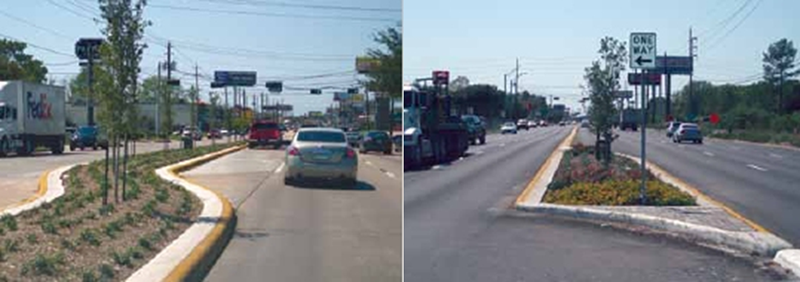
FM 1960 thoroughfare has a daily traffic count of 65,000 vehicles, 50 cross streets, 36 signals, and a driveway density of almost 49 driveways per mile. The crash rate along the corridor had a crash rate 217 percent higher than the statewide average. The Texas Department of Transportation's FM 1960 Median Improvement Project set out to improve mobility and safety along this 8 mile stretch.
Key Accomplishments and Results:
Installation of raised-curb medians, channelized left-turn bays, signal improvements, and striping.
Reduction in conflict points
More efficient traffic operations
Law enforcement officials in the area believe the project will reduce crashes and help emergency vehicles reach their destinations along the corridor more quickly
Modeling indicates a reduction in travel time by 16 percent, delays by 40 percent, and number of stops by 45 percent
Original publication: National Roadway Safety Awards: Noteworthy Practices Guide; 2011
Description of Practice
As one of the fastest growing counties in the Nation and responsible for 520 miles of highways, Wright County initiated a number of safety programs and strategies to minimize injuries and fatalities.
Key Accomplishments and Results:
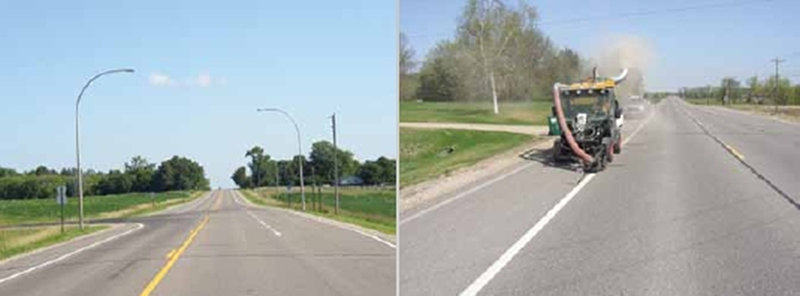
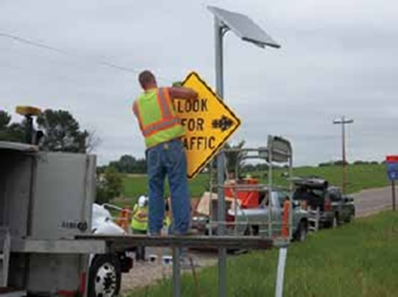
Utilization of pavement markings and signage, and ITS technologies such as intersection warning systems, curve warning system, and driver feedback speed limit signs.
Project contributed to a 34 percent reduction of fatal and serious injury crashes since 1997
Original publication: National Roadway Safety Awards: Noteworthy Practices Guide; 2011
Description of Practice
In order to meet Minnesota's Toward Zero Deaths goal, roadway safety at the local-level needed to be addressed. County highway departments in Minnesota didn't have the experience with carrying out system-wide crash analysis or linking crash causes with mitigation strategies at specific locations. The County Road Safety Plans (CRSP) Program was created by MnDOT to more effectively involved local highway agencies in the safety planning process and provide them with technical assistance needed to apply for State and Federal funding.
Key Accomplishments and Results:
Crash analysis and system-wide risk assessment of road and traffic characteristics for each county
Identification of low-cost, infrastructure-based safety project for specific at-risk locations on county roads
Project prioritization and training about the Highway Safety Improvement Program solicitation process
First set of 20 country road safety plans identified $70 million worth of projects with 90% focused on roadway departure crashes
Original publication: National Roadway Safety Awards: Noteworthy Practices Guide; 2011 (PDF, 1.1 MB)
Description of Practice
With roughly 10 percent of all roadway fatalities in the United States, California has a well-established process for identifying and constructing safety improvements. However, these processes did not capture the over 600 individual local agencies eligible for Federal Highway Safety Improvement Program (HSIP) funding.
Key Accomplishments and Results:
Tool to satisfy the long-term Caltrans objective of making data-driven safety decisions
User-friendly tool that makes fair and reliable statewide project selections following Federal guidelines for proven safety countermeasures.
Encourages local agencies to put a great emphasis on roadway safety through network analysis and low-cost safety projects.
Data-driven HSIP project selections at the local level
Contact
Ted Davini
California Department of Transportation
916-651-8256 Ted.Davini@dot.ca.gov
Original publication: National Roadway Safety Awards: Noteworthy Practices Guide; 2011
Description of Practice
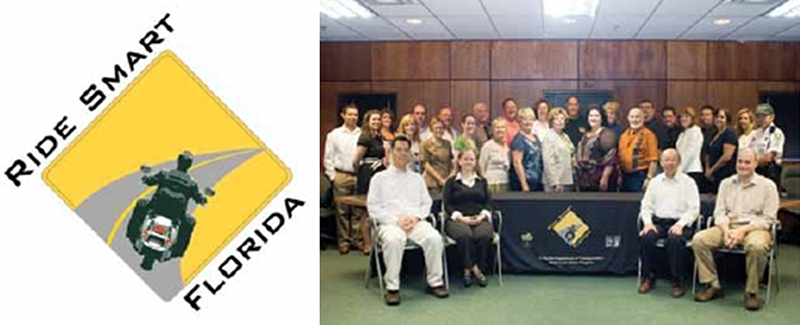
With help from the National Highway Traffic Safety Administration, Florida DOT formed a motorcycle safety coalition and a Motorcycle Strategic Safety Plan. The safety coalition created a training DVD to call attention to common challenging road conditions including grates, potholes, ridges, steel plates, pavement markings, grooved surfaces, loose gravel, land changes, and drop-offs in work zones.
Key Accomplishments and Results:
Creation of a 10-minute training DVD
Identifying safety countermeasures through the Motorcycle Strategic Plan
Integration of motorcycle safety into strategic planning initiatives
Original publication: National Roadway Safety Awards: Noteworthy Practices Guide; 2011
Description of Practice
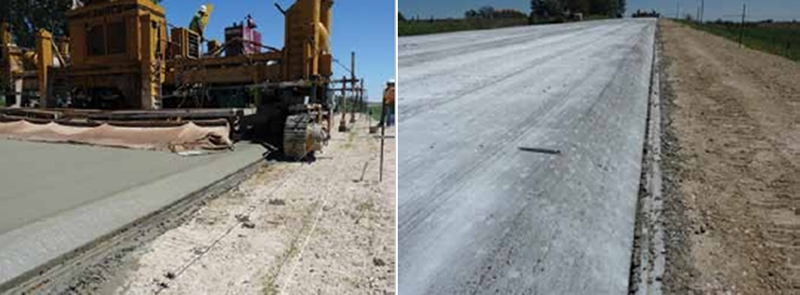
An Iowa State University study found that a pavement edge drop-off may have been a contributing factor in approximately 18% of rural run-off-the-road crashes on paved roadways with unpaved shoulders. They also found that pavement edge drop-off-related crashes were twice as likely to result in fatalities as other crash types on similar roadways. Safety Edge℠ was installed on a 2.7 mile stretch of roadway which had been previously identified as a “High Risk Rural Road” and the agency evaluated the constructability, quality, and performance of the project.
Key Accomplishments and Results:
Installation of 6-inch unbonded Portland cement concrete (PCC) overlay placed of an existing 6-inch PCC pavement. Overlay included two 11-foot lanes with tied 2-foot shoulders plus a 9-inch wide, 30-degree sloped Safety Edge℠ in both eastbound and westbound directions.
Crash reduction factors indicate that the use of Safety Edge℠ has the potential to reduce crashes by 5.7 percent and may provide additional pavement edge stability improving overall pavement life.
Original publication: National Roadway Safety Awards: Noteworthy Practices Guide; 2011
Description of Practice
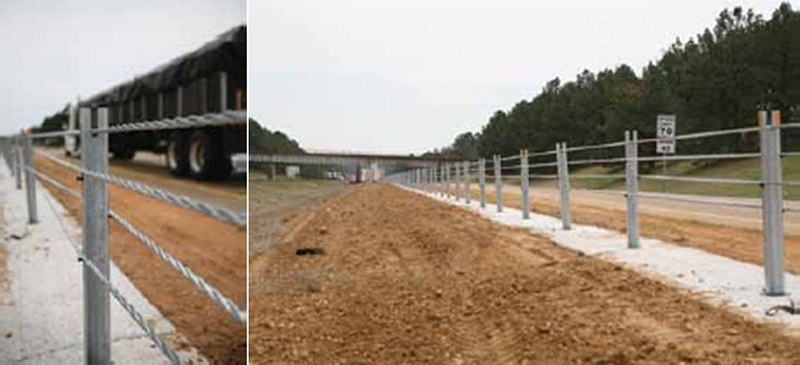
State DOT recognized certain corridors as having high occurrence of median-crossover crashes. Mississippi launched a cable median barrier safety initiative. Program piloted in early 2000's showed immediate and significant reduction in crash severity and zero cross-median fatalities.
Key Accomplishments and Results:
Immediate reduction in crash severity on segment with long history of high crash rates
Widespread public support
Outstanding return on investment
Multiple cable median barrier projects have resulted in immediate reduction of fatalities and the severity of crashes.
Original publication: National Roadway Safety Awards: Noteworthy Practices Guide; 2011
Description of Practice
Bridges in Minnesota were experiencing a higher crash rate than the surrounding highways. Super-elevated curve geometry was suspected in causing intensified icing and wet weather crashes. Minnesota Department of Transportation (MnDOT) experimented with using micro surfacing to reduce crash rates.
Key Accomplishments and Results
Utilized micro surfacing to address wet weather crashes
76% reduction in wet weather crashes after placing micro surfacing
19% reduction in total crashes after placing micro surfacing
14:1 payback ratio at 5 year life, 19.7:1 with 7 year life
Contact
Thomas J. Wood
MnDOT District 3B and Office of Materials and Road Research
651-366-5573 Thomas.Wood@state.mn.us
Describe the roadway safety situation or state before the new practice was implemented. What was the safety issue, problem, or gap?
In any given year, between 40 and 50% of the fatalities and serious injuries in Florida occur in local roads. The percentage of safety funds spent on local roads, however, has been at most between 4 and 8% per year. In order to further reduce fatalities and serious injuries, Florida DOT (FDOT) has identified the need to address safety concerns on the local roads.
Lower levels of safety funding on local roads was due to limited knowledge in local agencies of the state and Federal safety programs and their requirements. Local agencies were submitting an average of only three applications for safety improvement projects per year. To increase local-level applications for safety funding, FDOT needed to create a program that increased local-level awareness of programs and application processes. The District 7 (D7 - Tampa) Local Safety Summit was, and continues to be, an ambitious step in the development and implementation of a Local Road Safety Program.
What were the key challenges that the noteworthy practice sought to address?
Key challenges to address include:
Lack of knowledge on the part of local agencies of Federal and state safety programs and requirements
Lack of a single point of contact for all local agencies
Relatively high staff turnover at the local agencies (impacting the safety culture within the organization and the development of a consistent/long-term agency safety program)
Lack of staff with specialized knowledge of safety at some local agencies
A mechanism for assisting the local agencies to ensure their safety projects are submitted correctly and complete, and making the submittal process is simple as possible
Describe the new practice.
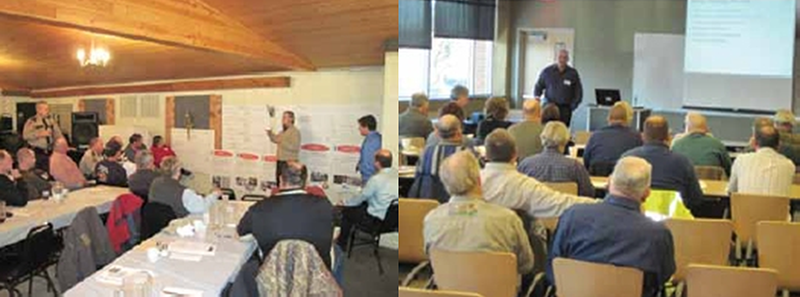
D7 launched an annual Safety Summit, a one-day seminar where local agencies, law enforcement, FDOT staff and D7 Safety Team members within District 7's jurisdiction discuss roadway safety. During the summit, FDOT and the Federal Highway Administration make presentations about applicable state and Federal safety requirements, programs, and processes for obtaining funding for local safety improvements. FDOT also links local agencies to “safety ambassadors” who help agencies understand options and funding opportunities for implementing roadway safety improvements on local roads.
D7 has also developed a “Local Agency Safety Funding Guide for Off-System Roadways” for local agencies that serves as a guide for the Highway Safety Improvement Program (HSIP) application process. The District also maintains a Safety Summit >web site that contains summit information, HSIP resources, and an online application agencies can use to submit their safety projects. (Local agencies continue to have the option of submitting their projects through the paper application process.)
List the key accomplishments that resulted from the new practice. Include the roadway safety improvements.
Established a framework and venue that fosters the exchange of local roads knowledge. As a result, local agencies have an improved understanding of the application process required to receive project funding.
As a result of the improved level of understanding regarding the application process, the number of project submissions made by local agencies increased from averaging 3 applications each year to 50+ applications per year.
What technical and/or institutional changes resulted from the new practice?
Institutional changes include:
Local agencies have a better understanding of how to request funding and submit applications for safety improvement projects.
Improved communications and coordination between D7 and local agencies has resulted in projects being delivered on-time and within budget.
What benefits were realized as a result of the practice?
Prior to the safety summits, D7 used to receive around three off-system safety project requests per year. Since the safety summit has been held, FDOT D7 has received 50+ applications per year from their local agencies seeking HSIP funding for their safety projects. Local agencies are now more willing and able to address local road safety issues using Federal safety funds.
Original publication: 2013 National Roadway Safety Awards Noteworthy Practices Guide; FHWA-SA-14-002; 2013
Before: Rotary prior to conversion. Note lack of deflection from entrance on far side of the photo.
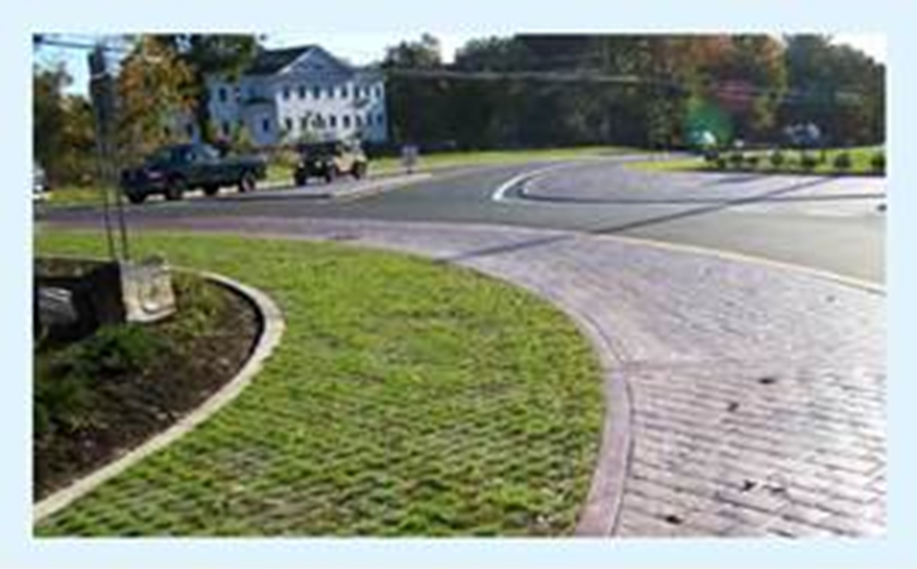
After: Close-up of truck apron constructed during conversion to roundabout, along with a raised truck “blister” on the outside of the roundabout.
Describe the roadway safety situation or state before the new practice was implemented. What was the safety issue, problem, or gap?
Connecticut Department of Transportation (ConnDOT) searched for ways to reduce intersection crashes in Connecticut. The geometry of an existing rotary, at the intersection of Routes 80 and 81 in Killingworth, allowed higher speeds and conflicts between entering and circulating traffic and could not support vehicles with a larger turning radius. The rotary experienced high crash rates and included numerous deficiencies. The most obvious deficiency was the lack of deflection on the entrances. As with most rotaries, this one was originally configured to give the right of way to the entering traffic, with traffic in the circle having to yield to incoming vehicles. The entrances had little if any deflection, which allowed for high entry speeds and increased the potential for a serious collision.
What were the key challenges that needed to be addressed before the new practice could be implemented?
The Insurance Institute for Highway Safety performed a study on the extensive safety benefits of converting signalized and all-way stop-controlled intersections to modern roundabouts. Encouraged by these results, the Connecticut Department of Transportation (ConnDOT) decided to convert some of its old traffic circles to roundabouts.
ConnDOT reviewed several sites and selected three pilot locations based on crash history, volumes, constructability, and the potential for improvement. Due to safety concerns, the rotary at the intersection of Routes 80 and 81 in Killington, Connecticut, was a prime candidate.
Describe the new practice:
The existing rotary facility at the intersection of Routes 80 and 81 in Killington was replaced with a roundabout. To slow traffic on the approaches, ConnDOT created some deflection and added a truck apron around the central island. The overall dimensions of the intersection were not altered, but the east leg was realigned slightly to improve the angle of the intersection. In addition, ConnDOT installed raised splitter islands and raised truck “blisters” (raised truck aprons placed on the outside of the roundabout) on two of the four quadrants. ConnDOT removed some of the existing pavement to create a more circular intersection shape, which helped with deflection and slowed traffic.
List the key accomplishments that resulted from the new practice. Include the roadway safety improvements.
Reduced Crash rates
What benefits were realized as a result of the practice?
Measurable reductions in crashes, injuries, and fatalities. Speeds are now within the range of 15-20 MPH for all movements, eliminating the significant speed differentials that existed previously. Comparing the latest available 3-year period (2009-2011) crash history to the 2005-2007 data, the total number of crashes was reduced from 20 to 10 (50% reduction), the number of injury crashes was reduced from 6 to 1 (83% reduction), and the number of injuries was reduced from 7 to 1 (86% reduction).
Is the practice you are submitting from a larger report, journal, or other document? Yes
2013 National Roadway Safety Awards Noteworthy Practices Guide
Publication FHWA-SA-14-002
Contact
William Britnell
Connecticut Department of Transportation
860-594-3274 William.Britnell@ct.gov