USA Banner

Official US Government Icon

Official websites use .gov
A .gov website belongs to an official government organization in the United States.

Secure Site Icon

Secure .gov websites use HTTPS
A lock ( ) or https:// means you’ve safely connected to the .gov website. Share sensitive information only on official, secure websites.

U.S. Department of Transportation U.S. Department of Transportation Icon United States Department of Transportation United States Department of Transportation

Noteworthy Practices

Left Nav - HSA Learn Safety

Kentucky Transportation Cabinet Applies Systemic Safety Project Selection Tool on Behalf of Local Agencies

Original publication: Kentucky Transportation Cabinet Applies Systemic Safety Project Selection Tool on Behalf of Local Agencies(PDF, 417kB)


Overview of Practice

The Kentucky Transportation Cabinet (KYTC) applied the Systemic Safety Project Selection Tool (Tool) to a local road system. Through the Federal Highway Administration Focus State Initiative, KYTC staff had previously conducted systemic planning focused on roadway departure crashes on State highways. This planning effort, however, did not analyze or suggest any improvements for rural county roads. In 2012, KYTC used the Tool to analyze county roadway corridors on behalf of local agency staff in five counties—Boyle, Bourbon, Franklin, Mercer, and Montgomery.

Results

The Tool proved beneficial for KYTC because it provided an easy-to-apply process to evaluate locally owned and operated roads. Applying the Tool did not require additional data gathering; all the data used in the analysis were based on available photo logs.

Contact

Tracy Lovell, P.E.
Transportation Engineer
Kentucky Transportation Cabinet
Tracy.Lovell@ky.gov

Driving Under the Influence: Crash Portrayals Teach Young People the Consequences of Dangerous Behaviors Behind the Wheel - Seminole County, Florida


Background

Traffic officials in Seminole County noticed that the county had a problem with teens driving under the influence. For these officials, every young life lost or changed forever from an alcohol-related driving incident was one life too many.

Traditional in-class driving safety education was not helping to get teens to think about the risks of drinking and driving once they were no longer within school walls. Traffic officials had to think bigger, to bring the education out of the classroom, and to dramatize for students the impact that drinking and driving and other risky driving behaviors would have on their friends, family, and society.

Key Challenges

The key challenge in getting a new kind of driving safety education program off the ground was in gaining support and sign-off from the following groups:

  • Partner agencies, including local emergency services
  • The county public school administration
  • Each of the county's nine public schools

Description of Practice

"Screen capture from the safety video shows two cars crashing on a high school field. There is a 'play' button graphic atop the photograph to signify that this image is linked to the video."

The Mock-DUI program, as it was originally named, is a community-wide effort that relies on the participation of concerned citizens, local businesses, high school educators, as well first responders, including fire and police (see participants list at the end of this document). This program educates young drivers on the stark consequences of driving under the influence of drugs or alcohol and driving while texting, speeding, or not using safety belts, with a full portrayal of a crash caused by one of these dangerous behaviors.

Juniors and seniors at all nine public high schools and at one private school in Seminole County will see the portrayal once during their high school careers. Organizers try to hold the portrayal shortly before a major school event, such as Homecoming, and it is typically held on the school's athletic fields. All teenage actors are students at the school where the portrayal is held. The portrayal begins with an introduction from a member of local law enforcement, who tells students that the portrayal is not meant to scare them, but to present facts.

A young man then drives across the field to his date's house to pick her up for a dance. The couple says goodbye to her parents and promise she'll be back by midnight. They drive away. Instead of going to the dance, they go to a party. Soon there is a loud bang and smoke. Two hidden cars are revealed, wrecked; the car driven by the young man has hit another car. He is unharmed but his date has been killed and two people in the other car are badly injured—they are maimed, or have suffered brain damage. Real emergency service personnel arrive and use the Jaws of Life to remove the injured, and a Medevac helicopter lands on the field to take one of the injured to a hospital. The young man is given a field sobriety test, he is arrested, and faces decades in prison. A hearse arrives to remove the body of the young woman.

"Screen capture from the safety video shows a police officer riding a motorcyle on the track around a high school field while students watch from the stands"

For the rest of the day, the actor playing the arrested young man is not in school, while a single rose is placed on the desk of the actress playing the young woman who was killed.

Results

Local trends show fewer fatalities from teens driving under the influence since the program began in 2002. There is also anecdotal evidence that students are more aware of risky driving behaviors. For the first 10 years of the program, Seminole County traffic officials received written summaries from teens who had watched the portrayal, to understand how much they learned, retained, and how the program could be tweaked. Transportation officials drew on this deep knowledge pool to improve the program and build on past successes. The program grew to include more law enforcement and emergency personnel and more vehicles so that the portrayal would most accurately reflect a real crash.

A mother recently told Seminole County transportation officials that her daughter had put the lessons learned to good use. Days after a portrayal her daughter went to a dance and noticed that a friend who was supposed to drive her home was acting strangely. She did not get in the car, and that friend crashed. The mother appreciated that her daughter had absorbed the lessons from the Seminole County risky driving portrayal.

Benefits Realized

The primary benefits have been greater student engagement in thinking about risky driving behaviors, and improved multi-agency training. The creators of the risky driving portrayal program have developed a template for staging the enactment. Several counties and schools districts have contacted Seminole County to learn about bringing the program to their students.

Community Participation in the Mock DUI Event

Local Citizens:

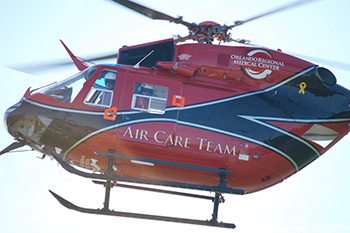
"Photograph of a hovering helicopter with the words 'Air Care Team' on the side"
  • John and Sally Shepard - Brain injury survivors

High Schools:

  • Seminole County Public Schools:
  • Crooms Academy
  • Hagerty High
  • Lake Brantley High
  • Lake Howell High
  • Lake Mary High
  • Lyman High
  • Oviedo High
  • Seminole High
  • Winter Springs High
  • Trinity Preparatory School

Businesses:

  • Baldwin-Fairchild Funeral Home
  • C&S Towing
  • AAA/Auto Club South
  • MTRecycling
  • Nationwide Insurance

Agencies:

  • Altamonte Springs Police Department
  • Casselberry Police Department
  • Casselberry Fire Department
  • Lake Mary Police Department
  • Lake Mary Fire Department
  • Longwood Police Department
  • Longwood Fire Department
  • Oviedo Police Department
  • Oviedo Fire Department
  • Sanford Police Department
  • Sanford Fire Department
  • Winter Springs Police Department
  • Florida Highway Patrol
  • Seminole County Fire Department
  • Seminole County Sheriff's Office
  • Seminole County State Attorney's Office

Contact

Robin Butler
Seminole County Fire Department
407-665-5641
rbutler@seminolecountyfl.gov

Washington Integrates its SHSP with Other State Plans and Programs

The Washington practice is discussed after the following introduction about SHSP integration.

Other states in this SHSP Integration Noteworthy Practices series: DE, ID, ME, MD, ND


Introduction to SHSP Integration

The Strategic Highway Safety Plan (SHSP) is a statewide-coordinated safety plan that provides a comprehensive framework for reducing the number of deaths and serious injuries on all public roads. In each State, the SHSP identifies the State's safety goals, objectives and key emphasis areas. It is intended to serve as an ‘umbrella’ plan that is integrated into other State transportation plans and guides the State's roadway safety investment decisions.

Integration Defined

Integration is the act of bringing together or incorporating various parts into a whole. Integration is relevant and important to a State's planning process because every State has numerous transportation plans; each one potentially addressing safety in a different way. The SHSP is the mechanism to bring these safety “parts” together to form a consistent and “whole” safety program for the State.

The Purpose and Benefits of Integration

The purpose of integration is to coordinate and focus the State's roadway safety efforts to maximize the State's ability to save lives.

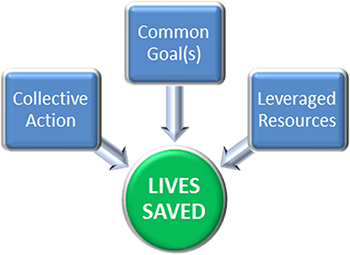
Through integration, the safety needs of the State can be addressed more strategically and resources can be shared more effectively. As illustrated in Figure 1, integration encourages State partners to strive toward common goals, collectively implement appropriate strategies and actions, share resources to meet or exceed the State's goals and objectives, and most importantly to save lives.

"Image shows three boxes pointing to one circle. The three boxes are above the circle. From right to left, the boxes read:  'Collective Action,' 'Common Goal(s),' and 'Leveraged Resources.' The circle reads 'Lives Saved.' The figure represents an integration process that encourages State partners to strive toward common goals, collectively implement appropriate strategies and actions, share resources to meet or exceed the State's goals and objectives, and most importantly, to save lives."

Other potential integration benefits include:

  • The use of consistent data and analysis methods.
  • Improved allocation of resources to more effectively produce safety improvements.
  • Improvements to safety culture across State, regional, and local agencies.
  • A reduction in the administrative burden on States and local agencies.

Integration of Plans and Processes

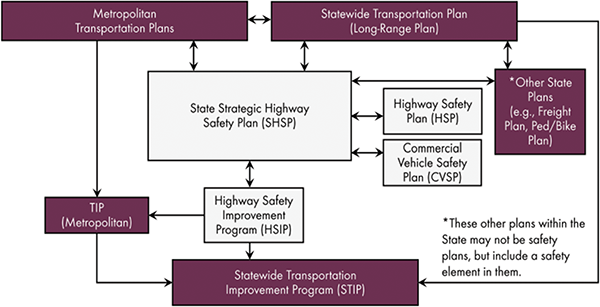
State transportation plans and programs that the SHSP should be integrated with include the Statewide Long Range Transportation Plan (LRTP), Statewide Transportation Improvement Plan (STIP), State Highway Safety Improvement Programs (HSIPs), the Commercial Vehicle Safety Plan (CVSP), the Highway Safety Plan (HSP) Metropolitan Transportation Plans (TIPs), and various modal and regional transportation plans. The relationship of these plans is illustrated in Figure 2.

"The image is a work flow that shows the various state transportation plans and programs that the SHSP should be integrated with. These include the Statewide Long Range Transportation Plan (LRTP), Statewide Transportation Improvement Plan (STIP), State Highway Safety Improvement Programs (HSIPs), the Commercial Vehicle Safety Plan (CVSP), the Highway Safety Plan (HSP) Metropolitan Transportation Plans (TIPs), and various modal and regional transportation plans."

An integrated SHSP positions the State DOT and its safety partners to collectively address the State's safety challenges on all public roads through coordination and consistency among with the following State and regional plans and programs:

  • LRTPs to promote a long-range vision that incorporates safety priorities.
  • HSIP projects to be consistent with the SHSP emphasis areas and strategies.
  • STIPS/TIPS to align programming of projects with SHSP strategies and countermeasures.
  • CVSPs to facilitate exchange and collaboration between the commercial motor vehicle safety community and the broader safety community.
  • HSPs to ensure a consistent, data-driven approach to improving highway safety, especially in SHSP emphasis areas.

In addition, the SHSP should integrate with city and county planning processes to ensure consideration of safety concerns on all road types.

SHSP Integration Indicators

Indicators that the SHSP and other transportation plans and processes are integrated include the following:

  • Other transportation plans incorporate elements of the SHSP and include consistent and supporting safety goals, performance measures, objectives, and strategies.
  • The priorities and goals of other transportation programs and plans are considered when developing the SHSP.
  • Safety partners have access to and use of common safety data, analysis, and methods for determining safety priorities.
  • The SHSP is developed with sustained input from disciplines and agencies representing the 4Es of safety (engineering, enforcement, education, and emergency medical services).
  • Safety partners assist in the implementation of SHSP strategies.
  • SHSP stakeholders and experts are included in other transportation planning processes.
  • SHSP priorities and strategies are considered in project prioritization and programming.
  • Various sources of funding are used to achieve safety goals.
  • Progress towards safety goals is measured jointly and regularly.

Washington

Background

The Washington Traffic Safety Commission (WTSC) is an autonomous state agency responsible for coordinating traffic safety efforts throughout the state of Washington and leading the strategic highway safety plan (known as Target Zero®) development. The WTSC is made up of ten commissioners from State, county, and city government and is chaired by the Governor. The Steering Committee for updating Target Zero® includes representatives from 17 organizations including State, regional, Tribal, and nonprofit agencies. In addition, multi-agency teams have been established to analyze the data and identify and evaluate safety strategies based on stakeholder input.

Target Zero® is a “practitioner's plan” intended to unite the contributing agencies and organizations. The plan will coordinate traffic safety programs, better align priorities and strategies, and provide a common language and approach to traffic safety efforts across Washington State. The plan is data-driven, identifying the factors contributing to fatality and serious injury collisions on Washington roadways, as well as pointing out proven and recommended strategies for reducing traffic deaths and serious injuries.

SHSP Integration Practices

Collaborative Development

The WTSC and the WSDOT have worked collaboratively over the years to develop the SHSP and have established a set of model practices for soliciting and incorporating input from a diverse array of stakeholders when updating their Target Zero® plan. Partner organizations from all over the state have multiple opportunities to provide input—through surveys, active participation in a partners' meeting, and by submitting comments and ideas on drafts of the Plan.

To solicit input from partners throughout the State, the Steering Committee issued a survey and held a day-long partners meeting. For the partners meeting, the Steering Committee invited over 800 participants from public, nonprofit, and private organizations across the State. Approximately 180 participants attended the meeting representing Federal and state agencies, Native American Tribes, local law enforcement agencies, local transportation departments, state legislators, advocacy groups, regional planning councils, and technology companies. At the partners' meeting, WTSC presented statewide traffic safety data and held group strategy discussions with partners on safety priority areas, soliciting ideas. Those facilitated discussions resulted in lists of potential strategies to address each priority area.

Following the partner meeting, subject matter experts in each of the priority areas led multi-agency teams in developing chapters on each of the priority areas. They compiled past successes, documented future plans, and critically examined the potential approaches to reduce fatalities and serious injuries. This resulted in a list of proven strategies that any organization can use to develop their own traffic safety plans.

The strong partnerships among safety agencies in Washington State did not happen overnight. They have been fostered and strengthened over a decade of conscious effort. The SHSP update process in Washington State allows a great array of safety partners with diverse perspectives to come together to have strategic discussions based on a common set of data. Each update of Target Zero® has drawn more partners, which in turn has led to new ideas, changed attitudes and behaviors, and greater coordination of efforts.

Common Goals, Strategies and Measures

Target Zero® is coordinated with other plans, including the Highway Safety Improvement Plan (HSIP), Highway Safety Plan (HSP), and the Commercial Vehicle Safety Plan (CVSP). Representatives from the agencies that steward these plans helped author the associated sections in Target Zero®.

Target Zero® sets common goals and safety strategies for State agencies and provides guidance to local agencies, nonprofit groups, and Tribes in Washington. The priorities identified in Target Zero® are guided by several factors including: the Governor's priorities as expressed in the Washington Transportation Plan, a careful review of traffic safety data and analysis, and input from partners. Target Zero® is intended to be incorporated into the plans and programs of key state traffic safety agencies, as well as other state agencies, Tribes, cities, counties, and private organizations. State agencies are required to integrate Target Zero® into their strategies and plans and it is strongly recommended for all law enforcement, engineering organizations, and any organization involved in traffic safety.

Federally funded programs administered by Washington State agencies set forth criteria to align the priorities and strategies identified in Target Zero®. WTSC also funds Target Zero® managers in local communities who are embedded in public agencies to facilitate traffic safety mobilizations, and implement and support proven Target Zero® strategies. This helps WTSC develop local partnerships and facilitate the implementation of proven safety strategies in key locations statewide.

Tribal Integration

The Steering Committee, which included Tribal representation, has made particular efforts to reach out to the 29 Federally Recognized Tribes located within the borders of Washington State for the Target Zero® update. In 2012, 12 Tribal members representing six Washington Tribes, participated in the partners' meeting and met for a special luncheon that day. Tribal representatives were invaluable in drafting the “Native American Tribes and Target Zero®” chapter of the Plan.

However, on an ongoing basis, Tribal and state representatives meet regularly to discuss transportation and traffic safety concerns. This sharing occurs at meetings of the Tribal Transportation Planning Organization and the Washington Indian Transportation Policy Advisory Committee. Tribes also actively participate on a Tribal Traffic Safety Advisory Board with the WTSC.

Key Accomplishments

  • Incorporated input from approximately 180 partners
  • Built strong safety partnerships with state, local, Tribal, and nonprofit agencies throughout the State
  • Incorporated input from Tribal representatives on safety strategies for reservation roadways
  • Set common data-driven goals and proven safety strategies for State, local, and Tribal agencies

See these other SHSP Integration Noteworthy Practices:

Contact

Darrin Grondel
Washington Traffic Safety Commission
(360) 725-9899
DGrondel@wtsc.wa.gov

Idaho Integrates its SHSP with Other State Plans and Programs

The Idaho practice is discussed after the following introduction about SHSP integration.

Other states in this SHSP Integration Noteworthy Practices series: DE, ME, MD, ND, WA


Introduction to SHSP Integration

The Strategic Highway Safety Plan (SHSP) is a statewide-coordinated safety plan that provides a comprehensive framework for reducing the number of deaths and serious injuries on all public roads. In each State, the SHSP identifies the State's safety goals, objectives and key emphasis areas. It is intended to serve as an ‘umbrella’ plan that is integrated into other State transportation plans and guides the State's roadway safety investment decisions.

Integration Defined

Integration is the act of bringing together or incorporating various parts into a whole. Integration is relevant and important to a State's planning process because every State has numerous transportation plans; each one potentially addressing safety in a different way. The SHSP is the mechanism to bring these safety “parts” together to form a consistent and “whole” safety program for the State.

The Purpose and Benefits of Integration

The purpose of integration is to coordinate and focus the State's roadway safety efforts to maximize the State's ability to save lives.

Through integration, the safety needs of the State can be addressed more strategically and resources can be shared more effectively. As illustrated in Figure 1, integration encourages State partners to strive toward common goals, collectively implement appropriate strategies and actions, share resources to meet or exceed the State's goals and objectives, and most importantly to save lives.

"Image shows three boxes pointing to one circle. The three boxes are above the circle. From right to left, the boxes read:  'Collective Action,' 'Common Goal(s),' and 'Leveraged Resources.' The circle reads 'Lives Saved.' The figure represents an integration process that encourages State partners to strive toward common goals, collectively implement appropriate strategies and actions, share resources to meet or exceed the State's goals and objectives, and most importantly, to save lives."

Other potential integration benefits include:

  • The use of consistent data and analysis methods.
  • Improved allocation of resources to more effectively produce safety improvements.
  • Improvements to safety culture across State, regional, and local agencies.
  • A reduction in the administrative burden on States and local agencies.

Integration of Plans and Processes

State transportation plans and programs that the SHSP should be integrated with include the Statewide Long Range Transportation Plan (LRTP), Statewide Transportation Improvement Plan (STIP), State Highway Safety Improvement Programs (HSIPs), the Commercial Vehicle Safety Plan (CVSP), the Highway Safety Plan (HSP) Metropolitan Transportation Plans (TIPs), and various modal and regional transportation plans. The relationship of these plans is illustrated in Figure 2.

"The image is a work flow that shows the various state transportation plans and programs that the SHSP should be integrated with. These include the Statewide Long Range Transportation Plan (LRTP), Statewide Transportation Improvement Plan (STIP), State Highway Safety Improvement Programs (HSIPs), the Commercial Vehicle Safety Plan (CVSP), the Highway Safety Plan (HSP) Metropolitan Transportation Plans (TIPs), and various modal and regional transportation plans."

An integrated SHSP positions the State DOT and its safety partners to collectively address the State's safety challenges on all public roads through coordination and consistency among with the following State and regional plans and programs:

  • LRTPs to promote a long-range vision that incorporates safety priorities.
  • HSIP projects to be consistent with the SHSP emphasis areas and strategies.
  • STIPS/TIPS to align programming of projects with SHSP strategies and countermeasures.
  • CVSPs to facilitate exchange and collaboration between the commercial motor vehicle safety community and the broader safety community.
  • HSPs to ensure a consistent, data-driven approach to improving highway safety, especially in SHSP emphasis areas.

In addition, the SHSP should integrate with city and county planning processes to ensure consideration of safety concerns on all road types.

SHSP Integration Indicators

Indicators that the SHSP and other transportation plans and processes are integrated include the following:

  • Other transportation plans incorporate elements of the SHSP and include consistent and supporting safety goals, performance measures, objectives, and strategies.
  • The priorities and goals of other transportation programs and plans are considered when developing the SHSP.
  • Safety partners have access to and use of common safety data, analysis, and methods for determining safety priorities.
  • The SHSP is developed with sustained input from disciplines and agencies representing the 4Es of safety (engineering, enforcement, education, and emergency medical services).
  • Safety partners assist in the implementation of SHSP strategies.
  • SHSP stakeholders and experts are included in other transportation planning processes.
  • SHSP priorities and strategies are considered in project prioritization and programming.
  • Various sources of funding are used to achieve safety goals.
  • Progress towards safety goals is measured jointly and regularly.

Idaho

Background

The Idaho Strategic Highway Safety Plan (SHSP) incorporates the input of numerous safety partners and is closely integrated with other State traffic safety plans. Idaho's SHSP brings partners together from across the State to address Idaho's most significant issues to improve safety and reduce traffic deaths and serious injuries.

SHSP Integration Strategies

Collaborative Development

The Idaho Transportation Department (ITD) developed the SHSP through a collaborative process with multiple safety partners with the explicit purpose of strengthening safety partnerships, supporting safety coalitions, sharing data, knowledge and resources, avoiding redundant activities, and leveraging existing resources. The ITD partnered with the Federal Highway Administration (FHWA) Office of Safety to host an SHSP Workshop and Peer Exchange in 2009. More than 100 professionals representing engineering, education, enforcement, and emergency response agencies participated in the event. Following this peer exchange, ITD developed an SHSP that establishes emphasis areas based on the economic costs of crashes, sets strategies across the 4Es, and clearly identifies lead roles and responsibilities for safety agencies across the State.

Coordinated Implementation

Implementation of the Idaho SHSP is guided by an oversight team that meets on a quarterly basis and consists of representatives from the ITD, the Idaho Trauma Registry, FHWA, the Idaho State Police, and the National Highway Traffic Safety Administration (NHTSA). ITD has developed an action steps tracking document, which includes information about the responsible party, funding, and activity status, to help monitor implementation of the SHSP.

ITD has established a sustained process for developing and implementing the SHSP through emphasis area teams led by partner safety agencies. Emphasis area teams have been established to lead the implementation of strategies in specific emphasis areas. Emphasis area team leads include representatives from local and state police departments, advocacy groups, and other highway safety partners. An ITD Highway Safety Program Manager and Research Analyst is a member of the respective emphasis area teams to act as a resource and liaison, but not to act as the chairman of the emphasis team. Each emphasis area team has defined performance measures, which were either agreed on by the SHSP oversight team or adopted from other relevant plans. The emphasis team leads report to the oversight team every six months.

Common Goals, Strategies, and Measures

The Highway Safety Office of the ITD is responsible for the SHSP, the Highway Safety Improvement Program (FHWA), and the Idaho Highway Safety Plan (NHTSA). This allows an integrated approach for safety planning and implementation to take place under one organizational structure for both the behavior and infrastructure programs. The Idaho SHSP places an emphasis on both infrastructure and behavioral factors in roadway crashes and is closely tied to the Idaho HSP. The strategies and projects listed in the HSP are explicitly aligned to strategies described in the SHSP emphasis areas. In addition, the SHSP includes a “Commercial Motor Vehicles” emphasis area that is led by a representative from Idaho State Police Commercial Vehicle Services and is closely tied to the Commercial Vehicle Safety Plan (CVSP). The close alignment of the SHSP, HSP, and CVSP ensures that funding and implementation strategies are closely coordinated across State agencies.

Outreach and Communication

ITD uses the SHSP to reach out to other State and local agencies within Idaho to coordinate safety efforts. ITD has developed brochures and talking points summarizing emphasis area crash data and SHSP strategies. In addition, ITD provides breakdowns of crash data by emphasis area for each of the six ITD districts. ITD uses these materials to conduct outreach with potential safety partners, including MPOs, local agencies, and advocacy organizations.

Key Accomplishments

  • Incorporates input from diverse array of partners representing 4Es
  • Assigns leadership roles for implementing SHSP to partners and tracks implementation of strategies
  • Closely aligns SHSP with Commercial Vehicle Safety Plan (CVSP) and Highway Safety Plan (HSP)

See these other SHSP Integration Noteworthy Practices:

Contact

Brent Jennings, P.E.
Idaho Transportation Department
(208) 334-8557
Brent.Jennings@itd.idaho.gov

Maine Integrates its SHSP with Other State Plans and Programs

The Maine practice is discussed after the following introduction about SHSP integration.

Other states in this SHSP Integration Noteworthy Practices series: DE, ID, MD, ND, WA


Introduction to SHSP Integration

The Strategic Highway Safety Plan (SHSP) is a statewide-coordinated safety plan that provides a comprehensive framework for reducing the number of deaths and serious injuries on all public roads. In each State, the SHSP identifies the State's safety goals, objectives and key emphasis areas. It is intended to serve as an ‘umbrella’ plan that is integrated into other State transportation plans and guides the State's roadway safety investment decisions.

Integration Defined

Integration is the act of bringing together or incorporating various parts into a whole. Integration is relevant and important to a State's planning process because every State has numerous transportation plans; each one potentially addressing safety in a different way. The SHSP is the mechanism to bring these safety “parts” together to form a consistent and “whole” safety program for the State.

The Purpose and Benefits of Integration

The purpose of integration is to coordinate and focus the State's roadway safety efforts to maximize the State's ability to save lives.

Through integration, the safety needs of the State can be addressed more strategically and resources can be shared more effectively. As illustrated in Figure 1, integration encourages State partners to strive toward common goals, collectively implement appropriate strategies and actions, share resources to meet or exceed the State's goals and objectives, and most importantly to save lives.

"Image shows three boxes pointing to one circle. The three boxes are above the circle. From right to left, the boxes read:  'Collective Action,' 'Common Goal(s),' and 'Leveraged Resources.' The circle reads 'Lives Saved.' The figure represents an integration process that encourages State partners to strive toward common goals, collectively implement appropriate strategies and actions, share resources to meet or exceed the State's goals and objectives, and most importantly, to save lives."

Other potential integration benefits include:

  • The use of consistent data and analysis methods.
  • Improved allocation of resources to more effectively produce safety improvements.
  • Improvements to safety culture across State, regional, and local agencies.
  • A reduction in the administrative burden on States and local agencies.

Integration of Plans and Processes

State transportation plans and programs that the SHSP should be integrated with include the Statewide Long Range Transportation Plan (LRTP), Statewide Transportation Improvement Plan (STIP), State Highway Safety Improvement Programs (HSIPs), the Commercial Vehicle Safety Plan (CVSP), the Highway Safety Plan (HSP) Metropolitan Transportation Plans (TIPs), and various modal and regional transportation plans. The relationship of these plans is illustrated in Figure 2.

"The image is a work flow that shows the various state transportation plans and programs that the SHSP should be integrated with. These include the Statewide Long Range Transportation Plan (LRTP), Statewide Transportation Improvement Plan (STIP), State Highway Safety Improvement Programs (HSIPs), the Commercial Vehicle Safety Plan (CVSP), the Highway Safety Plan (HSP) Metropolitan Transportation Plans (TIPs), and various modal and regional transportation plans."

An integrated SHSP positions the State DOT and its safety partners to collectively address the State's safety challenges on all public roads through coordination and consistency among with the following State and regional plans and programs:

  • LRTPs to promote a long-range vision that incorporates safety priorities.
  • HSIP projects to be consistent with the SHSP emphasis areas and strategies.
  • STIPS/TIPS to align programming of projects with SHSP strategies and countermeasures.
  • CVSPs to facilitate exchange and collaboration between the commercial motor vehicle safety community and the broader safety community.
  • HSPs to ensure a consistent, data-driven approach to improving highway safety, especially in SHSP emphasis areas.

In addition, the SHSP should integrate with city and county planning processes to ensure consideration of safety concerns on all road types.

SHSP Integration Indicators

Indicators that the SHSP and other transportation plans and processes are integrated include the following:

  • Other transportation plans incorporate elements of the SHSP and include consistent and supporting safety goals, performance measures, objectives, and strategies.
  • The priorities and goals of other transportation programs and plans are considered when developing the SHSP.
  • Safety partners have access to and use of common safety data, analysis, and methods for determining safety priorities.
  • The SHSP is developed with sustained input from disciplines and agencies representing the 4Es of safety (engineering, enforcement, education, and emergency medical services).
  • Safety partners assist in the implementation of SHSP strategies.
  • SHSP stakeholders and experts are included in other transportation planning processes.
  • SHSP priorities and strategies are considered in project prioritization and programming.
  • Various sources of funding are used to achieve safety goals.
  • Progress towards safety goals is measured jointly and regularly.

Maine

Background

The Maine SHSP brings together many state agencies pursuing traffic safety interests plus other safety advocates. Together they address Maine's leading traffic safety concerns in a coordinated way to maximize effectiveness and efficiency of achieving improvements in target areas.

SHSP Integration Practices

Collaborative Development

The Maine Department of Transportation (DOT) and Department of Public Safety's Bureau of Highway Safety (BHS) led an update of the SHSP in 2012. The 2012 SHSP identifies eight lead focus areas and six additional strategic areas. Champions from State, local and nonprofit agencies are identified for each of the 14 focus areas. A particular emphasis was placed on identifying local law enforcement champions to encourage local engagement in the plan. Champions are responsible for regularly convening working groups, reviewing data, and developing objectives and strategies, leading the implementation of strategies, and reporting progress. Strategies to bring about safety improvement include Engineering, Enforcement, Education/Public Outreach, and Emergency Services.

Common Goals, Strategies, and Measures

Maine's SHSP is closely tied to the Highway Safety Plan (HSP). The BHS and Maine DOT's Office of Safety work closely together to ensure that their efforts are coordinated. As a result, the goals expressed in the SHSP and HSP are common goals arrived at from reviewing the same data. Performance measures and targets included in the SHSP for behavioral emphasis areas are drawn from those defined in the HSP.

Coordinated Implementation

The Maine Transportation Safety Coalition (MTSC) provides another channel for coordinating safety efforts. Members of the coalition meet monthly to review data and coordinate efforts towards common goals. The MTSC helps to promote and integrate SHSP goals and strategies across the Maine safety community. The MTSC also helps to ensure that the major safety agencies in Maine are all communicating the same message about highway safety.

Outreach and Communication

The partnerships among Maine's safety agencies are reinforced through consistent communication and collaboration. Individuals in key safety agencies have made the effort to build personal relationships over time. Mechanisms like the SHSP update, the implementation process and the MTSC help to reinforce those personal relationships that are vital for ensuring that safety efforts are coordinated throughout the State.

Key Accomplishments

  • Identified champions from State, local, and nonprofit agencies to lead emphasis area strategy development and implementation
  • Closely aligned goals and performance measures in the SHSP with those in the Highway Safety Plan (HSP)
  • Promoted the SHSP through the Maine Transportation Safety Coalition

See these other SHSP Integration Noteworthy Practices:

Contact

Duane Brunell
Maine Department of Transportation
(207) 624-3278
Duane.Brunell@maine.gov

Maryland Integrates its SHSP with Other State Plans and Programs

The Maryland practice is discussed after the following introduction about SHSP integration.

Other states in this SHSP Integration Noteworthy Practices series: DE, ID, ME, ND, WA


Introduction to SHSP Integration

The Strategic Highway Safety Plan (SHSP) is a statewide-coordinated safety plan that provides a comprehensive framework for reducing the number of deaths and serious injuries on all public roads. In each State, the SHSP identifies the State's safety goals, objectives and key emphasis areas. It is intended to serve as an ‘umbrella’ plan that is integrated into other State transportation plans and guides the State's roadway safety investment decisions.

Integration Defined

Integration is the act of bringing together or incorporating various parts into a whole. Integration is relevant and important to a State's planning process because every State has numerous transportation plans; each one potentially addressing safety in a different way. The SHSP is the mechanism to bring these safety “parts” together to form a consistent and “whole” safety program for the State.

The Purpose and Benefits of Integration

The purpose of integration is to coordinate and focus the State's roadway safety efforts to maximize the State's ability to save lives.

Through integration, the safety needs of the State can be addressed more strategically and resources can be shared more effectively. As illustrated in Figure 1, integration encourages State partners to strive toward common goals, collectively implement appropriate strategies and actions, share resources to meet or exceed the State's goals and objectives, and most importantly to save lives.

"Image shows three boxes pointing to one circle. The three boxes are above the circle. From right to left, the boxes read:  'Collective Action,' 'Common Goal(s),' and 'Leveraged Resources.' The circle reads 'Lives Saved.' The figure represents an integration process that encourages State partners to strive toward common goals, collectively implement appropriate strategies and actions, share resources to meet or exceed the State's goals and objectives, and most importantly, to save lives."

Other potential integration benefits include:

  • The use of consistent data and analysis methods.
  • Improved allocation of resources to more effectively produce safety improvements.
  • Improvements to safety culture across State, regional, and local agencies.
  • A reduction in the administrative burden on States and local agencies.

Integration of Plans and Processes

State transportation plans and programs that the SHSP should be integrated with include the Statewide Long Range Transportation Plan (LRTP), Statewide Transportation Improvement Plan (STIP), State Highway Safety Improvement Programs (HSIPs), the Commercial Vehicle Safety Plan (CVSP), the Highway Safety Plan (HSP) Metropolitan Transportation Plans (TIPs), and various modal and regional transportation plans. The relationship of these plans is illustrated in Figure 2.

"The image is a work flow that shows the various state transportation plans and programs that the SHSP should be integrated with. These include the Statewide Long Range Transportation Plan (LRTP), Statewide Transportation Improvement Plan (STIP), State Highway Safety Improvement Programs (HSIPs), the Commercial Vehicle Safety Plan (CVSP), the Highway Safety Plan (HSP) Metropolitan Transportation Plans (TIPs), and various modal and regional transportation plans."

An integrated SHSP positions the State DOT and its safety partners to collectively address the State's safety challenges on all public roads through coordination and consistency among with the following State and regional plans and programs:

  • LRTPs to promote a long-range vision that incorporates safety priorities.
  • HSIP projects to be consistent with the SHSP emphasis areas and strategies.
  • STIPS/TIPS to align programming of projects with SHSP strategies and countermeasures.
  • CVSPs to facilitate exchange and collaboration between the commercial motor vehicle safety community and the broader safety community.
  • HSPs to ensure a consistent, data-driven approach to improving highway safety, especially in SHSP emphasis areas.

In addition, the SHSP should integrate with city and county planning processes to ensure consideration of safety concerns on all road types.

SHSP Integration Indicators

Indicators that the SHSP and other transportation plans and processes are integrated include the following:

  • Other transportation plans incorporate elements of the SHSP and include consistent and supporting safety goals, performance measures, objectives, and strategies.
  • The priorities and goals of other transportation programs and plans are considered when developing the SHSP.
  • Safety partners have access to and use of common safety data, analysis, and methods for determining safety priorities.
  • The SHSP is developed with sustained input from disciplines and agencies representing the 4Es of safety (engineering, enforcement, education, and emergency medical services).
  • Safety partners assist in the implementation of SHSP strategies.
  • SHSP stakeholders and experts are included in other transportation planning processes.
  • SHSP priorities and strategies are considered in project prioritization and programming.
  • Various sources of funding are used to achieve safety goals.
  • Progress towards safety goals is measured jointly and regularly.

Maryland

Background

The overall objective of Maryland's Strategic Highway Safety Plan (SHSP) is to reduce fatalities and Injuries. Maryland has adopted the vision of Towards Zero Death, with an overarching goal to halve fatalities in Maryland by 2030, and to 475 by 2015.

The SHSP is housed in the Highway Safety Office (HSO) under the direction and oversight of the highway safety coordinator. An Executive Council meets quarterly to receive SHSP updates, provide direction, review successes and discuss challenges. The Council is comprised of Maryland's: Secretary of the State Police; Motor Vehicle Administration (MVA) Administrator; State Highway Administration (SHA) Administrator; Deputy Secretary of the Department of Health and Mental Hygiene (DHMH); Department of Transportation's (MDOT) Director of Planning; Institute for Emergency Medical Services Systems (MIEMSS) Executive Director; and Transportation Authority Police.

SHSP Integration Practices

Common Goals, Strategies and Measures

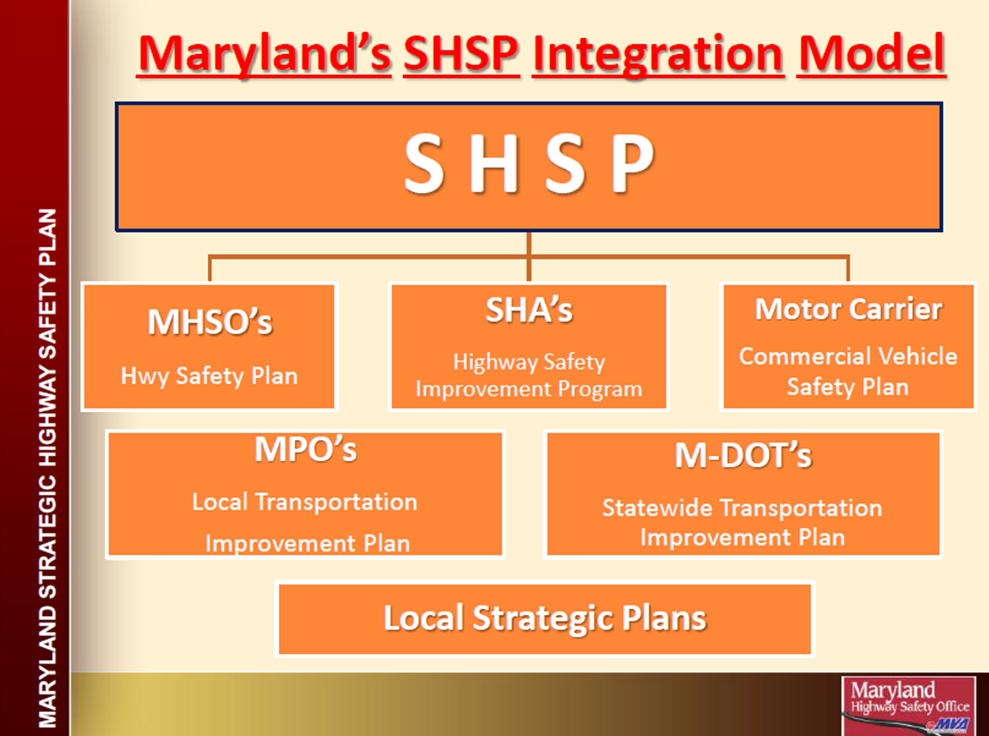
The SHSP serves as the long-term, overarching highway safety plan for the State. It directs the priorities and strategies addressed by the State's other highway safety related plans and programs, including the Highway Safety Plan (HSP), Highway Safety Improvement Program (HSIP) and the Commercial Vehicle Safety Plan (CVSP).

"The image displays Maryland's SHSP integration model. The image shows that the SHSP is informed by Highway Safety Plan (from the Maryland Highway Safety Office), the Highway Safety Improvement Program (from the State Highway Administration), and the Commercial Vehicle Safety Plan. The image also displays additional contributors to the SHSP: metropolitan planning organization, Maryland Department of Transportation, and local strategic plans."

The SHSP establishes broad strategies for the State. They are further defined into action steps that are developed by the SHSP emphasis area teams. These action steps form a selection of the projects outlined in the annual HSP, HSIP and CVSP. Keeping the strategies broad in nature allows a wide-range of buy-in from partners and an opportunity for all 4Es to participate as appropriate for their agencies.

Several key partners have committed their support for the SHSP through resolutions. The Maryland Chiefs of Police, Sheriff's Association, Association of County Health Officials, and the Institute for EMS Systems have all signed resolutions pledging their support to Maryland's Towards Zero Death vision, the SHSP, and helping to implement the SHSP strategies.

“The SHSP guides our overarching highway safety goals and efforts. The HSP, HSIP, CVSP and our other annual safety plans are where the rubber meets the road.”

- Thomas J. Gianni, Chief
Maryland Highway Safety Office

To achieve a fifty percent reduction in fatalities by 2030, a geometric mean reduction plan was devised to work backward from Maryland's future goal using 2008 as the benchmark year. This methodology was also used to set interim annual targets and various performance measures for the HSP & State Highway Administration Business Plans. In the future, Maryland will establish program area performance measures based on a rolling average, but the current methodology to set interim annual targets for the plans will remain the same.

Maryland has spent a great deal of effort elevating the SHSP in the eyes of the entire Department of Transportation. In prior years, the safety elements in the DOT's Statewide Long Range Transportation Plan and the Motor Vehicle Association's long range plan were not in line with the SHSP. Now the SHSP sets the tone and goals for these plans and the plans refer back to the SHSP. This is true for other State agency plans as well. For example, the Maryland Department of Health & Mental Hygiene and the Maryland State Police both have agency business plans with highway safety components. These safety components align with those in the SHSP. A big factor in accomplishing this is having the leadership from these agencies as members of the SHSP Executive Council.

Local Integration

Maryland is embarking in an effort to develop county roadway safety plans. The idea is to have local level plans that align with the SHSP, but with refined emphasis areas and strategies that have a local “flavor.” The State Highway Administration is taking the lead and is developing local data packages for counties.

For example, Hartford County has already developed a local SHSP and has set the stage for other county efforts. Like the state's SHSP, the Harford County SHSP follows a data driven, multidisciplinary approach involving the 4Es of traffic safety—education, emergency medical services, enforcement, and engineering. The plan provides a framework for reducing fatalities and serious injuries on all Harford County roads, and it establishes goals, objectives, and key emphasis areas in keeping with the goals and objectives of the SHSP. It also focuses on all road users to include bicyclists, drivers, motorcycle riders, and pedestrians.

Harford County will join Maryland in adopting the goal of the national initiative Toward Zero Deaths to reduce traffic fatalities by half by 2030. Harford County also used the same methodology as the state's SHSP to establish a benchmark for progress and will follow interim goals for fatality and injury reductions by 2015.

Key Accomplishments

  • Broad SHSP strategies to help engage partners
  • SHSP goals and strategies integrated with other State plans
  • Coordinated target setting
  • County SHSPs to help implement SHSP strategies at the local level

See these other SHSP Integration Noteworthy Practices:

Contact

Thomas J. Gianni
Maryland Highway Safety Office
(410) 787-4014
TGianni@mdot.state.md.us

North Dakota Integrates its SHSP with Other State Plans and Programs

The North Dakota practice is discussed after the following introduction about SHSP integration.

Other states in this SHSP Integration Noteworthy Practices series: DE, ID, ME, MD, WA


Introduction to SHSP Integration

The Strategic Highway Safety Plan (SHSP) is a statewide-coordinated safety plan that provides a comprehensive framework for reducing the number of deaths and serious injuries on all public roads. In each State, the SHSP identifies the State's safety goals, objectives and key emphasis areas. It is intended to serve as an ‘umbrella’ plan that is integrated into other State transportation plans and guides the State's roadway safety investment decisions.

Integration Defined

Integration is the act of bringing together or incorporating various parts into a whole. Integration is relevant and important to a State's planning process because every State has numerous transportation plans; each one potentially addressing safety in a different way. The SHSP is the mechanism to bring these safety “parts” together to form a consistent and “whole” safety program for the State.

The Purpose and Benefits of Integration

The purpose of integration is to coordinate and focus the State's roadway safety efforts to maximize the State's ability to save lives.

Through integration, the safety needs of the State can be addressed more strategically and resources can be shared more effectively. As illustrated in Figure 1, integration encourages State partners to strive toward common goals, collectively implement appropriate strategies and actions, share resources to meet or exceed the State's goals and objectives, and most importantly to save lives.

"Image shows three boxes pointing to one circle. The three boxes are above the circle. From right to left, the boxes read:  'Collective Action,' 'Common Goal(s),' and 'Leveraged Resources.' The circle reads 'Lives Saved.' The figure represents an integration process that encourages State partners to strive toward common goals, collectively implement appropriate strategies and actions, share resources to meet or exceed the State's goals and objectives, and most importantly, to save lives."

Other potential integration benefits include:

  • The use of consistent data and analysis methods.
  • Improved allocation of resources to more effectively produce safety improvements.
  • Improvements to safety culture across State, regional, and local agencies.
  • A reduction in the administrative burden on States and local agencies.

Integration of Plans and Processes

State transportation plans and programs that the SHSP should be integrated with include the Statewide Long Range Transportation Plan (LRTP), Statewide Transportation Improvement Plan (STIP), State Highway Safety Improvement Programs (HSIPs), the Commercial Vehicle Safety Plan (CVSP), the Highway Safety Plan (HSP) Metropolitan Transportation Plans (TIPs), and various modal and regional transportation plans. The relationship of these plans is illustrated in Figure 2.

"The image is a work flow that shows the various state transportation plans and programs that the SHSP should be integrated with. These include the Statewide Long Range Transportation Plan (LRTP), Statewide Transportation Improvement Plan (STIP), State Highway Safety Improvement Programs (HSIPs), the Commercial Vehicle Safety Plan (CVSP), the Highway Safety Plan (HSP) Metropolitan Transportation Plans (TIPs), and various modal and regional transportation plans."

An integrated SHSP positions the State DOT and its safety partners to collectively address the State's safety challenges on all public roads through coordination and consistency among with the following State and regional plans and programs:

  • LRTPs to promote a long-range vision that incorporates safety priorities.
  • HSIP projects to be consistent with the SHSP emphasis areas and strategies.
  • STIPS/TIPS to align programming of projects with SHSP strategies and countermeasures.
  • CVSPs to facilitate exchange and collaboration between the commercial motor vehicle safety community and the broader safety community.
  • HSPs to ensure a consistent, data-driven approach to improving highway safety, especially in SHSP emphasis areas.

In addition, the SHSP should integrate with city and county planning processes to ensure consideration of safety concerns on all road types.

SHSP Integration Indicators

Indicators that the SHSP and other transportation plans and processes are integrated include the following:

  • Other transportation plans incorporate elements of the SHSP and include consistent and supporting safety goals, performance measures, objectives, and strategies.
  • The priorities and goals of other transportation programs and plans are considered when developing the SHSP.
  • Safety partners have access to and use of common safety data, analysis, and methods for determining safety priorities.
  • The SHSP is developed with sustained input from disciplines and agencies representing the 4Es of safety (engineering, enforcement, education, and emergency medical services).
  • Safety partners assist in the implementation of SHSP strategies.
  • SHSP stakeholders and experts are included in other transportation planning processes.
  • SHSP priorities and strategies are considered in project prioritization and programming.
  • Various sources of funding are used to achieve safety goals.
  • Progress towards safety goals is measured jointly and regularly.

North Dakota

Background

The North Dakota Department of Transportation (NDDOT) Safety Division is responsible for coordinating the development and implementation of the State's Strategic Highway Safety Plan (SHSP). North Dakota recently updated the SHSP using a collaborative process that included a wide range of safety stakeholders including Federal, State, local, and private sector entities. The SHSP provides an overview of traffic safety issues and trends, goals, emphasis areas, initiatives, programs, and achievements to promote traffic safety in North Dakota.

SHSP Integration Practices

Collaborative Development

Through the SHSP, the North Dakota DOT promotes coordination with other traffic safety partners and initiatives throughout the state. The SHSP process has led to closer coordination among safety agencies. With each update, NDDOT has increased the number of stakeholders involved in the process.

The 2013 North Dakota SHSP update was led by the leadership of the NDDOT, in consultation with safety partners across the state who worked collaboratively towards their overall goal of eliminating all traffic fatalities and serious injuries on all North Dakota roads. At the onset, the SHSP was developed under the guidance of a steering committee consisting of representatives from NDDOT, the North Dakota Department of Health Division of Emergency Medical Services and Trauma, the North Dakota Highway Patrol, Federal Highway Administration (FHWA), and National Highway Traffic Safety Administration (NHTSA). To further incorporate stakeholder input into the SHSP, NDDOT invited about 100 4E stakeholders representing education, enforcement, engineering, and EMS from across the State to a workshop where they reviewed State safety data and identified strategies for implementation.

In addition to reviewing data, the SHSP steering committee also referred to associated safety plans and programs including the Traffic Records Strategic Plan and the Highway Safety Plan (HSP). The SHSP Steering Committee took part in the HSP data analysis and planning functions as well.

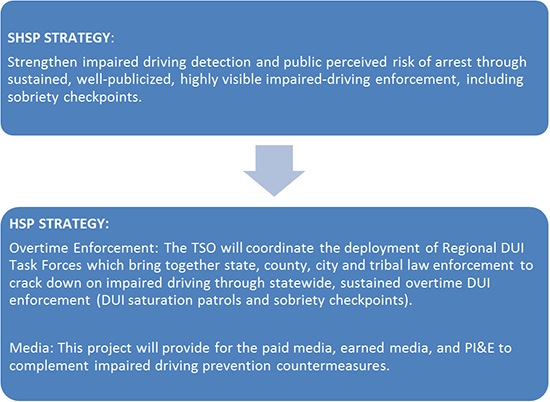
The NDDOT Safety Division is responsible for developing both the SHSP and the HSP. As a result, the SHSP and HSP are closely aligned. Strategies in the HSP are consistent with the SHSP priority emphasis areas and evidence-based strategies. In fact, the completed SHSP was used as a basis for selecting strategies for inclusion in the current HSP. The link between the SHSP and HSP strategies and projects can be seen in the following example from the Alcohol-Related Emphasis Area.

The NDDOT Programming Division is responsible for developing and implementing the Highway Safety Improvement Program (HSIP). The Programming Division served on the SHSP steering committee and actively participated in the 2013 North Dakota SHSP update. The NDDOT HSIP uses a data-driven, strategic approach to improving highway safety on all public roads. The NDDOT ensures the HSIP projects are consistent with the data-driven SHSP. This is easily accomplished due to the close coordination between the Programming Division, Safety Division and local partners.

"The image contains two boxes. The top box is the SHSP strategy for DUI. The bottom box is the HSP strategy for DUI. The image shows that the SHSP and HSP are closely aligned. Strategies in the HSP are consistent with the SHSP priority emphasis areas and evidence-based strategies."

Consensus Safety Goal

North Dakota has established a long-term goal to eliminate all traffic fatalities on North Dakota's public roads. While it is widely recognized within the state that there is only one suitable long-term goal, it is also acknowledged that intermediate (short-term) goals are needed as benchmarks to measure progress. Intermediate goals also promote cooperation among agencies to accomplish these goals. Discussions were held with safety stakeholders to begin the process of selecting an intermediate goal. Due to the upward trend of traffic fatalities, there was unanimous support for an aggressive intermediate goal to reduce traffic fatalities, and several options were discussed. After considering the stakeholders' input, the SHSP Steering Committee selected reducing the 3-year average of traffic fatalities to 100 or fewer by 2020 (approximately a 3 percent reduction per year).

SHSP Implementation

North Dakota acknowledges that the development of a data-driven SHSP and adopting crash reduction goals is only the first step. Plans do not save lives, implementation does. To reverse the current trend and achieve the crash reduction goal, North Dakota commits to a comprehensive statewide highway safety program with implementation of high priority safety strategies along roadway systems and facilities defined to be at-risk. The basic components of this comprehensive program are working with the safety partners to implement the driver-behavior program, implement infrastructure improvements, improve emergency response, and improve reporting of crashes.

Local and Tribal Integration

The NDDOT made specific efforts to reach out to the Tribes within North Dakota to include them as SHSP stakeholders. Tribal traffic safety coordinators and law enforcement officials were included as part of the SHSP development process. This partnership with tribal stakeholders also included efforts to collect and share safety data and data analysis.

To ensure the implementation of the SHSP at the local level, NDDOT has led the development of local road safety plans. They intend to develop local road safety plans for all 53 counties, 12 major cities, and 4 tribes in North Dakota. As part of the process, they will collect and analyze safety data, hold formal regional workshops to select countermeasures, and document high risk local road locations and safety projects for implementation. The local road safety plans will help NDDOT carry out SHSP strategies at a local level by identifying data-driven safety projects on local roads for HSIP and HSP funding.

Key Accomplishments

  • Incorporated stakeholder input into the SHSP from about 100 stakeholders
  • Closely aligned SHSP, Highway Safety Improvement Program (HSIP) and Highway Safety Plan (HSP)
  • Developing local road safety plans for each county and major city in North Dakota

See these other SHSP Integration Noteworthy Practices:

Contact

Mark Nelson
North Dakota Department of Transportation
(701) 328-4559
MNelson@nd.gov

Delaware Integrates its SHSP with Other State Plans and Programs

The Delaware practice is discussed after the following introduction about SHSP integration.

Other states in this SHSP Integration Noteworthy Practices series: ID, ME, MD, ND, WA


Introduction to SHSP Integration

The Strategic Highway Safety Plan (SHSP) is a statewide-coordinated safety plan that provides a comprehensive framework for reducing the number of deaths and serious injuries on all public roads. In each State, the SHSP identifies the State's safety goals, objectives and key emphasis areas. It is intended to serve as an ‘umbrella’ plan that is integrated into other State transportation plans and guides the State's roadway safety investment decisions.

Integration Defined

Integration is the act of bringing together or incorporating various parts into a whole. Integration is relevant and important to a State's planning process because every State has numerous transportation plans; each one potentially addressing safety in a different way. The SHSP is the mechanism to bring these safety “parts” together to form a consistent and “whole” safety program for the State.

The Purpose and Benefits of Integration

The purpose of integration is to coordinate and focus the State's roadway safety efforts to maximize the State's ability to save lives.

Through integration, the safety needs of the State can be addressed more strategically and resources can be shared more effectively. As illustrated in Figure 1, integration encourages State partners to strive toward common goals, collectively implement appropriate strategies and actions, share resources to meet or exceed the State's goals and objectives, and most importantly to save lives.

"Image shows three boxes pointing to one circle. The three boxes are above the circle. From right to left, the boxes read:  'Collective Action,' 'Common Goal(s),' and 'Leveraged Resources.' The circle reads 'Lives Saved.' The figure represents an integration process that encourages State partners to strive toward common goals, collectively implement appropriate strategies and actions, share resources to meet or exceed the State's goals and objectives, and most importantly, to save lives."

Other potential integration benefits include:

  • The use of consistent data and analysis methods.
  • Improved allocation of resources to more effectively produce safety improvements.
  • Improvements to safety culture across State, regional, and local agencies.
  • A reduction in the administrative burden on States and local agencies.

Integration of Plans and Processes

State transportation plans and programs that the SHSP should be integrated with include the Statewide Long Range Transportation Plan (LRTP), Statewide Transportation Improvement Plan (STIP), State Highway Safety Improvement Programs (HSIPs), the Commercial Vehicle Safety Plan (CVSP), the Highway Safety Plan (HSP) Metropolitan Transportation Plans (TIPs), and various modal and regional transportation plans. The relationship of these plans is illustrated in Figure 2.

"The image is a work flow that shows the various state transportation plans and programs that the SHSP should be integrated with. These include the Statewide Long Range Transportation Plan (LRTP), Statewide Transportation Improvement Plan (STIP), State Highway Safety Improvement Programs (HSIPs), the Commercial Vehicle Safety Plan (CVSP), the Highway Safety Plan (HSP) Metropolitan Transportation Plans (TIPs), and various modal and regional transportation plans."

An integrated SHSP positions the State DOT and its safety partners to collectively address the State's safety challenges on all public roads through coordination and consistency among with the following State and regional plans and programs:

  • LRTPs to promote a long-range vision that incorporates safety priorities.
  • HSIP projects to be consistent with the SHSP emphasis areas and strategies.
  • STIPS/TIPS to align programming of projects with SHSP strategies and countermeasures.
  • CVSPs to facilitate exchange and collaboration between the commercial motor vehicle safety community and the broader safety community.
  • HSPs to ensure a consistent, data-driven approach to improving highway safety, especially in SHSP emphasis areas.

In addition, the SHSP should integrate with city and county planning processes to ensure consideration of safety concerns on all road types.

SHSP Integration Indicators

Indicators that the SHSP and other transportation plans and processes are integrated include the following:

  • Other transportation plans incorporate elements of the SHSP and include consistent and supporting safety goals, performance measures, objectives, and strategies.
  • The priorities and goals of other transportation programs and plans are considered when developing the SHSP.
  • Safety partners have access to and use of common safety data, analysis, and methods for determining safety priorities.
  • The SHSP is developed with sustained input from disciplines and agencies representing the 4Es of safety (engineering, enforcement, education, and emergency medical services).
  • Safety partners assist in the implementation of SHSP strategies.
  • SHSP stakeholders and experts are included in other transportation planning processes.
  • SHSP priorities and strategies are considered in project prioritization and programming.
  • Various sources of funding are used to achieve safety goals.
  • Progress towards safety goals is measured jointly and regularly.

Delaware

Background

A core committee of coordinating agencies made up of Delaware Department of Transportation (DelDOT), Delaware's Office of Highway Safety (OHS), the Delaware State Police (DSP), the Delaware Office of Emergency Medical Services (OEMS), and the Delaware Department of Justice led the update of the Delaware Strategic Highway Safety Plan in 2010. The committee closely coordinated with the Federal Highway Administration (FHWA) and the National Highway Traffic Safety Administration (NHTSA) throughout the process.

SHSP Integration Practices

Collaborative SHSP Development and Implementation

The process of developing Delaware's 2010 SHSP update helped to strengthen existing partnerships across safety agencies in Delaware. Including all of the key State public safety agencies on the core committee responsible for updating the SHSP ensured that all of the agencies had a chance to review the same crash data, reach agreement about safety priorities in the State based on the crash data, and identify a robust set of multidisciplinary strategies to address each crash type. The inclusion of the OEMS on the core committee led to the identification of a number of new emergency response strategies being included in the 2010 update. The core coordinating agencies continue to work together on various safety initiatives and coordinate to ensure that the strategies identified in the SHSP are implemented. DelDOT also uses the SHSP as an outreach tool for talking to other public agencies within Delaware about the State's roadway safety priorities and strategies.

Coordinated Goals

The coordinating agencies reviewed fatal crash data as well as FHWA and American Association of State Highway and Transportation Officials (AASHTO) guidelines for SHSPs to select and prioritize the emphasis areas in accordance with the frequency of the associated crash type. In addition to emphasis areas based on crash types, the coordinating agencies added “Improving Traffic Records” as an emphasis area.

Although the national and statewide overall SHSP goals are based on fatality rates rather than fatal crash rates, Delaware's coordinating agencies agreed to base Delaware's data analyses and performance-based goals for each emphasis area on the number of fatal crashes rather than the number of fatalities for all data-driven emphasis areas, except for the emphasis area dedicated to Increasing Seat Belt Usage.

The SHSP established goals for each primary emphasis area based on a percent reduction in the number of fatal crashes and the corresponding reduction in the number of fatal crashes. Additionally, the group reviewed the goals in other Delaware safety plans including OHS's FY 2010 Highway Safety Plan (HSP), the Delaware Traffic Safety Information System Strategic Plan, and DSP's FY 2010 Motor Carrier Safety Assistance Program Commercial Vehicle Safety Plan (CVSP), to ensure that the goals of the SHSP were consistent with the goals of other statewide initiatives.

SHSP Strategies Reflected as Projects in Highway Safety Plan

The coordinating agencies selected education, enforcement, engineering, and emergency services strategies to address each emphasis area. Strategies were selected based on their cost-effectiveness, potential rate of return, and proven effectiveness.

SHSP strategies are reflected in other State plans, such as the HSP. For example, an SHSP emphasis area is “Increasing Seat Belt Usage.” The strategies in the SHSP involve educational and enforcement campaigns to inform the public of the safety benefits of wearing a seat belt. Enforcement and education strategies are reflected in Delaware's most recent HSP, as projects to provide funding to law enforcement agencies with an identified traffic safety problem to conduct enforcement blitzes focused on occupant protection violations. The enforcement includes both checkpoints and saturation patrols and is supported by paid media.

Coordination among the agencies has been particularly important for establishing and implementing strategies for “Improving Traffic Records.” The State Traffic Records Coordinating Committee (TRCC) is responsible for leading data improvement efforts in Delaware. The TRCC's Traffic Safety Information System Strategic Plan is referenced in the SHSP as well as the HSP as the guide to ensure that the proper steps are being taken to create data systems that are timely, accurate, consistent, complete, and accessible.

The SHSP outlines the projects and strategies to improve information and decision support systems that are in the TRCC's Strategic Plan, such as expansion of the Crash Analysis Reporting System (CARS) to support DelDOT's safety program, and a new EMS data system (Delaware Information Management for Emergency Services (DIMES). The HSP then specifies traffic records projects and the allocation of funds to activities such as:

  • E-crash enhancements
  • CARS enhancements
  • DIMES system for the Office Emergency Medical Services

Data projects like these have been instrumental in advancing Delaware's ability to utilize comprehensive traffic safety data when making resource allocation decisions.

Key Accomplishments

  • Committee of coordinating agencies instrumental in developing and implementing plan
  • Aligned goals and strategies in the SHSP, HSP and CVSP
  • Identified emergency services strategies to address each primary emphasis area
  • Identified roles and responsibilities for leading 4E strategies
  • Strengthened partnerships among State safety agencies

See these other SHSP Integration Noteworthy Practices:

Contact

Adam Weiser
Delaware Department of Transportation
(302) 659-4073
Adam.Weiser@state.de.us

Safety Patrol Sponsor-Partnership

Original publication: National Roadway Safety Awards: Noteworthy Practices Guide; 2011


Description of Practice

With ongoing state fiscal crises reducing or eliminating funding for safety patrol programs, Travelers Marketing assisted seven states in securing sponsorship and forging partnerships with companies whose business interests and corporate missions align with the program's safety objectives.

Key Accomplishments and Results:

  • Innovative funding strategy to save what would have likely been a program cut due to funding struggles.
  • Program generated in excess of $30 million for the participating states of Florida, Pennsylvania, Georgia, New York, Maryland, Kansas, and Massachusetts.
  • Generated public awareness of roadway safety

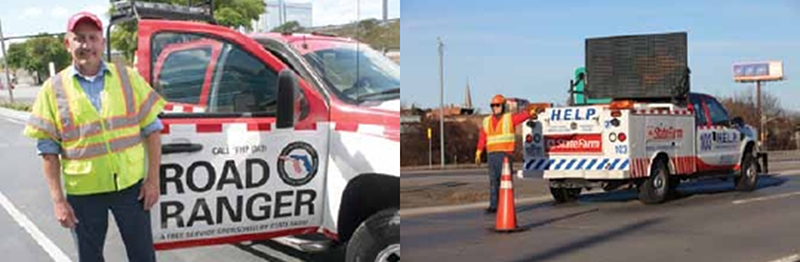
"Two photograph: (1) A safety engineer standing beside his truck with the Florida Road Ranger logo and (2) A Road Ranger truck with a message board atop it and a safety engineer diverting traffic around one lane"

Contact

Samuel A. McClain
Travelers Marketing LLC
407-456-1917
smmclain@travelersmarketing.com

Idaho Uses Highway Safety Manual Methodology to Identify Priority Locations for Safety Improvements

Original publication: National Roadway Safety Awards: Noteworthy Practices Guide; 2013

Download latest Adobe® Reader


Description of Practice

To improve cost effectiveness in funding safety projects, Idaho Transportation Department used an innovative, data-driven program for safety analysis on roadways throughout the State. The project includes assessing 5 years of statewide crash records, diagnosing the priority locations to determine casual relationships between site characteristics and crash records, identifying recommended improvements, and conducting benefit-cost analysis to rank the recommended safety improvements.

Key Accomplishments and Results:

  • Utilization of the Highway Safety Manual (HSM) methodology to identify the highest priority locations for safety improvements
  • List of ranked safety improvement projects reflecting the most effective use of funding for safety projects

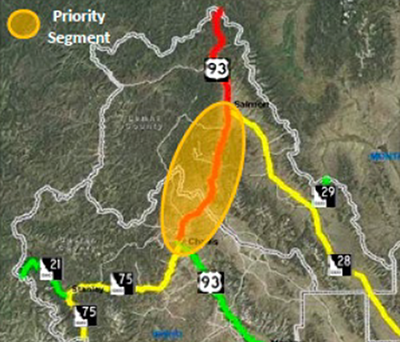
"Map showing the priority corridor identified by the data"

Contact

Brent Jennings
Idaho Transportation Department Office of Highway Safety
208-334-8557
Brent.Jennings@itd.idaho.gov