


Why the Systemic Approach?
A total of 197,941 people lost their lives in crashes on public roads in the U.S. between 2018 and 2022. Those lives lost, and any lives lost, are unacceptable. The National Roadway Safety Strategy acknowledges this and adopted the Safe System approach (see Figure 1) to achieve a goal of zero fatalities and serious injuries. One principle of the Safe System approach is for transportation agencies to adopt a proactive approach to highway safety. A systemic approach to safety is a proactive approach.
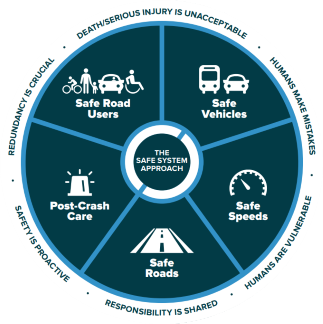
Figure 1. The Safe System approach (Source: FHWA).
To support the adoption and use of a proactive approach to reach zero fatalities, FHWA updated the 2013 Systemic Safety Project Selection Tool. The updated Guide, the Systemic Safety User Guide, synthesizes current systemic safety practices and is now available for public agencies at all levels—Federal, State, Tribal, local, and regional—interested in applying the systemic safety approach. The target audience includes analysts, engineers, public works personnel, planners, technicians, specialists, and managers responsible for safety programs. These safety professionals can use the Guide in their role to plan, implement, and evaluate systemic improvements.
The Systemic Approach to Safety
The systemic approach to road safety is proactive with the goal of preventing fatal and suspected serious injury crashes before they happen. Like a visit to your doctor, the systemic approach employs various methods to identify factors that could contribute to or are correlated with severe crashes. Agencies identify high-risk locations based on those factors and then install low- to moderate-cost countermeasures at the identified high-risk locations.
While severe crashes tend not to cluster over time and occur at seemingly random locations over time (see Figure 2), the factors associated with severe crashes are strikingly consistent. As such, the systemic approach to safety prioritizes safety improvements at locations where those risk factors are present, rather than where crashes have occurred historically. Further, agencies can use various types of available data to identify risk factors, including crash, roadway, traffic, land use, socioeconomic, and demographic data. As such, the systemic approach is customizable to the specific needs of agencies across the country.
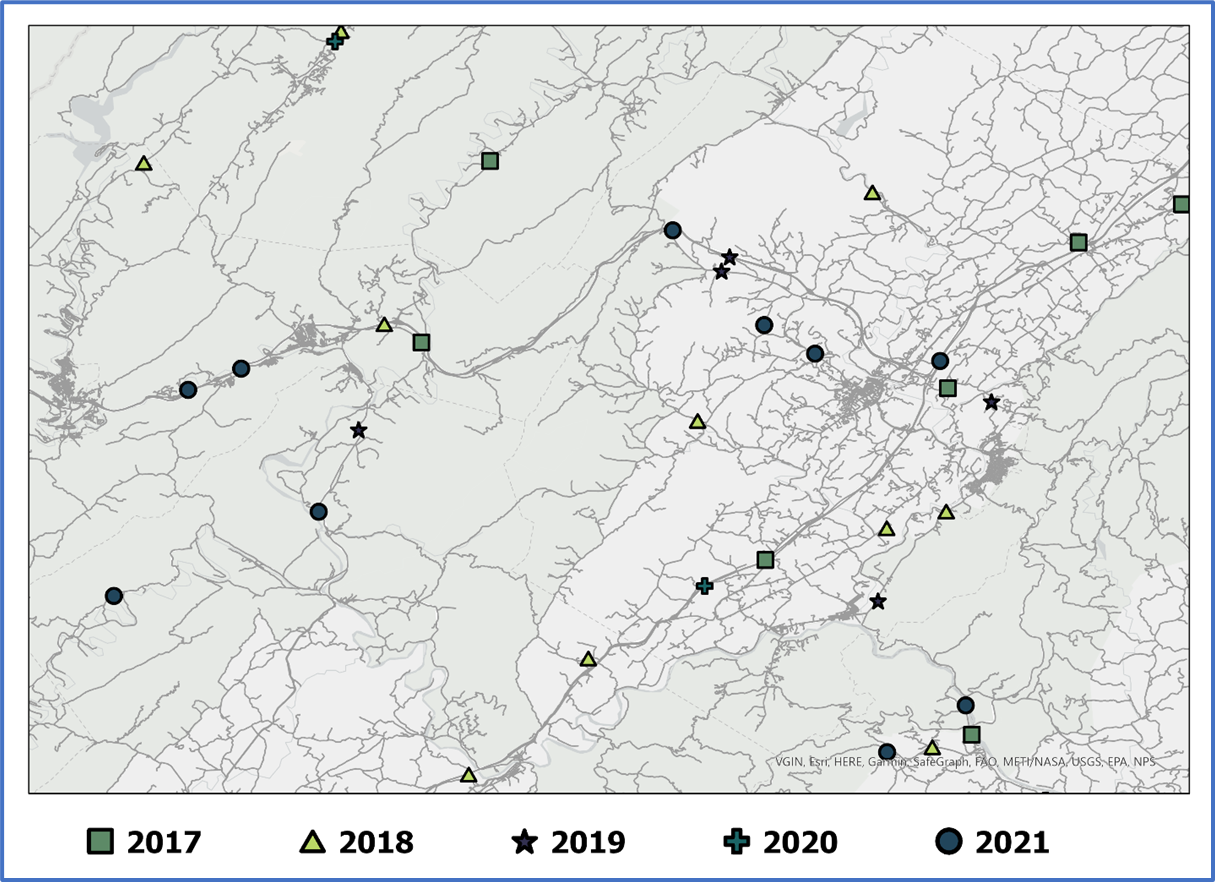
Figure 2. Fatal rural roadway departure crashes in Virginia. (Source: FHWA.)
The systemic approach differs from the two other typical approaches to safety management – spot-specific and systematic. Table 1 describes the differences between the three approaches. Each approach has benefits and drawbacks, which is why the Guide recommends that agencies use a combined approach to comprehensive safety management, employing all three strategies to reduce fatalities and serious injuries.
Table 1. Differences between site-specific, systematic, and systemic safety (Source: FHWA).
|


Organization of the Systemic Safety User Guide
The systemic approach to safety consists of six steps guided by the safety management cycle; Figure 3 shows the steps and the cyclical nature of the process. The structure of the Guide is based on the systemic approach to safety, which is guided by the safety management cycle. The Guide includes:
· Introduction – Introduction to safety management, motivation to apply the systemic approach to safety, and a description of the structure of the Guide.
· Chapter 1 – Identify Focus Crash Types, Facility Types, and Risk Factors – Information on how an agency can select the focus crash types, facility types, and risk factors for the systemic safety analysis.
· Chapter 2 – Screen and Prioritize Candidate Locations – Methods for agencies to develop a prioritized list of candidate sites for improvement.
· Chapter 3 – Identify and Select Countermeasures – Describes how agencies can develop a menu of countermeasures and select the preferred measure for each site.
· Chapter 4 – Prioritize Systemic Projects – Strategies agencies can use to prioritize systemic projects for the HSIP or other transportation programs.
· Chapter 5 – Deliver Systemic Projects – Various methods for preparing, implementing, and tracking systemic safety improvement projects.
· Chapter 6 – Evaluate Systemic Safety Results – Methods agencies can use to evaluate systemic safety projects, countermeasures, programs, and overall performance.
· Bringing it All Together – Example application of the systemic approach to safety.
· Case Studies – Select case studies highlighting notable systemic safety efforts.
The steps are split into respective tasks, making the structure of the Guide easy to follow and implement. The Guide includes an example problem and five case studies from different agencies across the country to show how an agency could apply and adjust the steps to fit their specific needs and data capabilities.
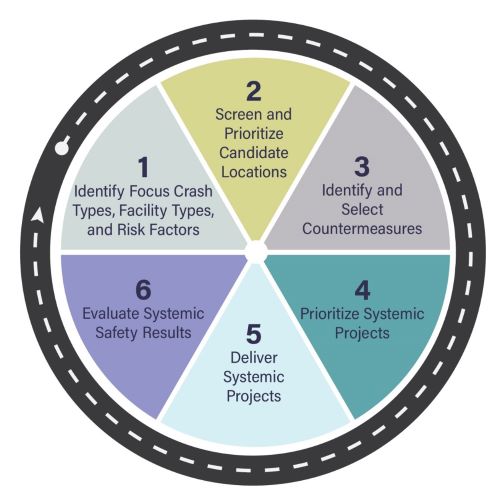
Figure 3. The steps of the systemic approach to safety (Source: FHWA).
Benefits of the Updated Guide
The updated Guide builds on over a decade of experience applying the systemic approach to safety. This includes highlighting how the systemic approach is especially useful for pedestrians and bicyclists, how agencies can incorporate equity into highway safety planning, and how the approach ties into the National Roadway Safety Strategy and Safe System approach.
Additionally, all steps and methods in this Guide are described with scalability in mind; agencies can adapt the methods based on the desired level of effort, data capabilities, and resources. Agencies are encouraged to tailor and modify the process to meet their needs. The Guide provides helpful hints and considerations throughout to reinforce this point and provide additional clarity; each chapter also includes responses to frequently asked questions. The Guide includes dozens of real examples which readers can use as models for their implementation of the systemic approach.
Last updated: Wednesday, February 18, 2026